UK Bettors Leverage Cross-Market Sync Tools to Refine Multi-Sport Staking Plans
Written by Dana Sullivan · Oct 23, 2026

UK Bettors Leverage Cross-Market Sync Tools to Refine Multi-Sport Staking Plans
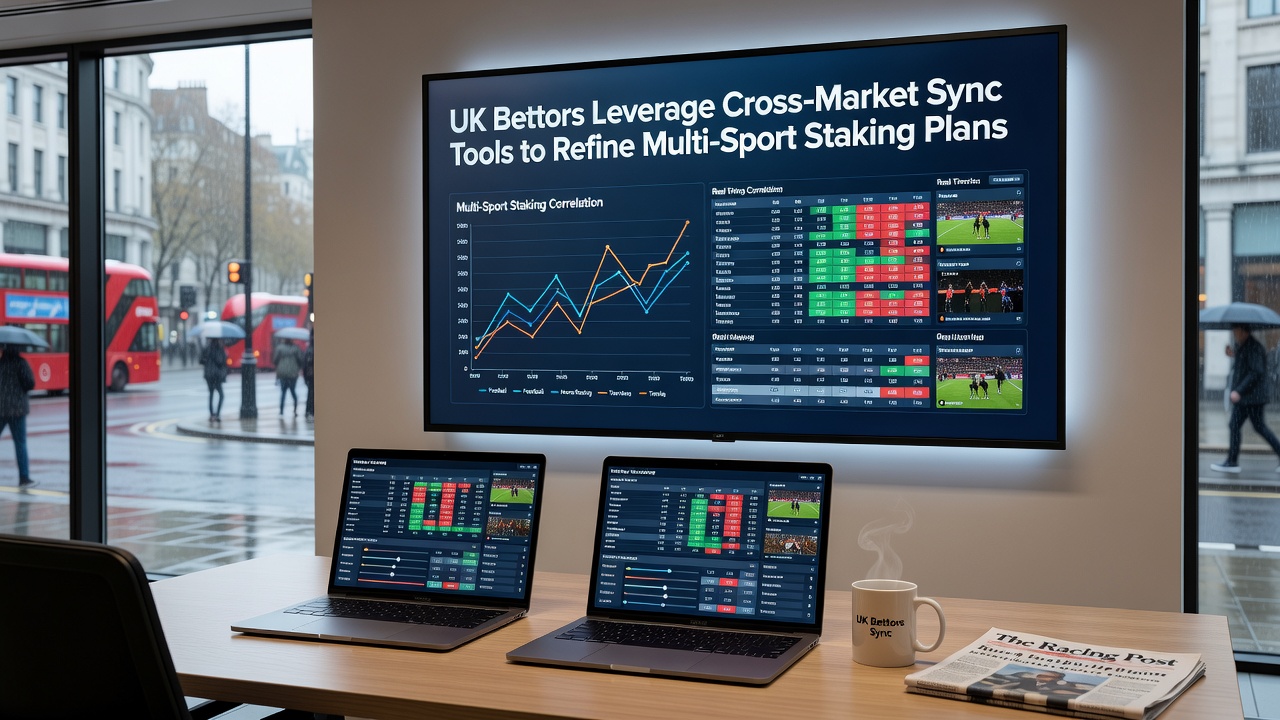
UK bettors have adopted cross-market sync tools that pull live data streams from football, horse racing, and tennis into unified dashboards, allowing adjustments to staking allocations across events happening on the same day. These platforms connect odds from multiple bookmakers while tracking stake limits and payout structures, so users can shift portions of a bankroll when one market moves faster than another. Data from industry reports shows adoption rates rose steadily through 2025, with further growth noted in October 2026 as more operators released API connections for real-time updates.
How Sync Tools Connect Separate Markets
Operators design these tools to merge feeds from different sports, displaying implied probabilities side by side rather than in isolated tabs. Bettors set rules that trigger alerts when a horse race odds shift exceeds a threshold at the same moment a football match line moves. The system then recalculates remaining stake capacity for the day, preventing over-allocation before the next event starts. Researchers at the University of Sydney documented similar data integration patterns in their 2025 study on multi-platform betting interfaces, noting that synchronized alerts reduced manual cross-checking time by measurable margins.
Practical Applications in Daily Staking
One group of users configures sync rules around afternoon horse meetings and evening football fixtures, letting the tool flag when total exposure across both exceeds a preset percentage of available funds. The platform then suggests a reduced stake on the later event or pauses additional placements until earlier results settle. Another set of bettors links tennis matches that overlap with steeplechase races, using the sync function to monitor volatility in both and adjust unit sizes accordingly. Figures from the Canadian Gaming Association's annual market review reveal that platforms offering these features recorded higher average session durations in regions where users manage multiple sports simultaneously.
Stake sequencing becomes more precise when the tool calculates running totals after each result posts. If an early horse race returns above the projected amount, the sync dashboard updates the remaining bankroll figure and recalculates safe stake sizes for the football legs that follow. Conversely, a loss in one market prompts an automatic reduction in the next planned stake, keeping the overall daily plan within original risk parameters. Observers note that these adjustments happen within seconds of result confirmation rather than after manual recalculation.
Integration with Existing Bookmaker Accounts
Most sync tools require users to link existing UK bookmaker accounts through secure APIs, pulling current odds and account balances without exposing login credentials directly. Once connected, the platform aggregates exposure across all linked sites and displays a consolidated view of open positions. This setup lets bettors see how a stake placed on one operator affects the overall plan when another market opens elsewhere. European Gaming and Betting Association data compiled in mid-2026 indicated that account-linking features contributed to more structured staking patterns among multi-sport participants.
Alert systems within these tools notify users when a synchronized price reaches a pre-set level across two or more sports. The notification includes the adjusted stake recommendation based on the remaining daily allocation, allowing a quick decision before the window closes. People who maintain separate accounts for different bookmakers find this consolidation reduces the chance of exceeding self-imposed limits during busy racing or tournament periods.
Data Tracking and Adjustment Cycles
Sync platforms maintain logs of every stake placed through the connected accounts, tagging each entry with the sport, event time, and market type. Over weeks these logs produce reports that show how allocations shifted between football, tennis, and horse racing in response to odds movement. Bettors review the summaries to identify periods when one sport consistently drew larger portions of the bankroll than planned. Adjustments then follow, such as tightening the maximum stake percentage for that sport on future days.
October 2026 saw several providers add predictive modules that estimate how current odds movements might affect later events in the same cycle. The module draws on historical patterns within the user's own data set rather than external forecasts, producing suggested stake ranges for remaining fixtures. Those ranges update automatically when new results post, keeping the plan aligned with actual outcomes instead of initial projections.
Conclusion
Cross-market sync tools continue to expand the range of data points UK bettors can monitor within a single session. By linking accounts, displaying combined exposure, and recalculating stakes after each result, these systems support more coordinated approaches to multi-sport staking. As operators release further API connections and users accumulate longer personal data histories, the precision of daily allocation adjustments is expected to increase further.